WCC welcomes Kasia Kowalska, NDS, for conversation on Christian–Jewish dialogue
12/11/2026 | Na stronie od 15/11/2026
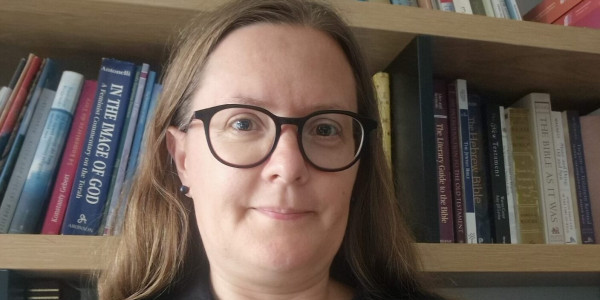
Source: WCC
The World Council of Churches (WCC) welcomed Sister Dr Katarzyna (Kasia) Kowalska, NDS, to the Ecumenical Centre in Geneva on 12 November for a presentation and conversation entitled “Christian–Jewish Dialogue and Wider Interreligious Engagement: Perspectives from the International Council of Christians and Jews.”
A Catholic religious sister of the Congregation of Our Lady of Sion, theologian, and educator, Sister Kasia has dedicated more than two decades to fostering understanding and reconciliation between Jewish and Christian communities.
She serves as vice president of the International Council of Christians and Jews and cochair of the Polish Council of Christians and Jews. In 2025, she receive/2024-06-28-kowalska-wiceprzewodniczaca-iccjd the Father Stanisław Musiał Award in recognition of her contribution to Jewish–Christian relations and combating antisemitism.
The gathering provided an opportunity to reflect on the history, ongoing work, and specific challenges facing the International Council of Christians and Jews in carrying out its activities and advancing its mission, as well as its engagement in wider interreligious dialogue, including relations with Muslims.
The conversation also provided an opportunity for WCC staff members to exchange experiences and perspectives on the growing challenges facing interreligious dialogue in an increasingly polarized and fractured world.
“The discussion highlighted the need to preserve spaces for honest and constructive conversation, even amid profound political disagreements,” said Prof. Dr Angeliki Ziaka, WCC programme executive for Interreligious Dialogue and Cooperation.
Learn more about the WCC's work on Interreligious Dialogue and Cooperation
Interreligious Dialogue and Cooperation
WCC attempts to strengthen interreligious trust and respect through bilateral and multilateral dialogues, and through regional and cross-cultural encounters on topics like religion and violence, perceptions of "the other," and the search for identity in pluralistic societies.
Embracing dialogue as a concrete way of living out the gospel’s call to love God and our neighbours, the office of Interreligious Dialogue and Cooperation strives to nurture interreligious encounter and engagement among member churches, as a means of furthering the fullness and flourishing of all life.
Since its establishment in 1971, the office promotes dialogue as “the common adventure of the churches” to be undertaken in a spirit of honesty, hospitality and hope as we pursue “what makes for peace and for mutual upbuilding” (Rom. 14:19) in a multi-religious world.
Meaningful dialogue involves the translation of committed and creative theological reflection into courageous and compassionate action. Therefore, the WCC interreligious desk seeks to build bridges of trust and respect with neighbours of other faiths and to develop interreligious solidarities that can promote justice, peace, and the wellbeing of the entire creation.