Jom Jeruszalaim – Dzień Jerozolimy
14/05/2026 | Na stronie od 15/05/2026
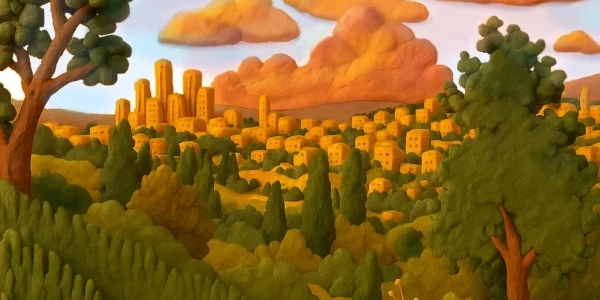
Źródło: Żydowski Instystut Historyczny
Autor: Przemysław Batorski
28 dnia miesiąca ijar w Izraelu obchodzony jest Jom Jeruszalaim, czyli Dzień Jerozolimy. Upamiętnia on zjednoczenie Jerozolimy, które miało miejsce po 19 latach podziału, podczas wojny sześciodniowej w 1967 r.
Historyczna stolica Izraela jest świętym miejscem dla Żydów, chrześcijan i muzułmanów. O panowanie nad nią przez stulecia toczono wojny i spory religijne. Po utworzeniu państwa Izrael w 1948 r. ONZ planowało uczynić z Jerozolimy strefę międzynarodową. Propozycję tę odrzuciły jednak państwa arabskie, a podczas I wojny izraelsko-arabskiej Jordania zajęła część Jerozolimy – Stare Miasto. Odtąd aż do 1967 r. Żydzi nie mieli wstępu do tej części miasta.
W czerwcu 1967 r. Izrael został zaatakowany przez Egipt, Syrię i Jordanię. W krótkiej kampanii – tzw. wojnie sześciodniowej – odniósł zwycięstwo, dzięki któremu zajął Wzgórza Golan, należące do Syrii, kontrolowane przez Egipt półwysep Synaj oraz Okręg Gazy oraz Zachodni Brzeg Jordanu i część Jerozolimy, które należały do Jordanii. Zajęcie Jerozolimy miało miejsce 7 czerwca 1967 r., w 28 dzień miesiąca ijar. W tegorocznym kalendarzu gregoriańskim 28 dzień ijar zaczyna się 9 maja 2021 r. i trwa do zmierzchu 10 maja.
Zajęcie całej Jerozolimy miało wielkie znaczenie polityczne i religijne. Po raz pierwszy od zburzenia Świątyni przez Rzymian w 70 r. Wzgórze Świątynne i Ściana Płaczu znalazły się pod kontrolą Żydów. W 1980 r. parlament Izraela ustanowił Jerozolimę stolicą państwa, siedzibą parlamentu, prezydenta i rządu. Decyzja ta nie została uznana przez Radę Bezpieczeństwa ONZ, a większość państw świata nadal lokuje swoje przedstawicielstwa dyplomatyczne w Tel-Awiwie.
Naczelny rabin Izraela ogłosił Jom Jeruszalaim pomniejszym świętem religijnym. W tym dniu tysiące ludzi – przede wszystkim religijnych Żydów – maszeruje wokół Jerozolimy w uroczystym pochodzie. Marsz kończy się pod Ścianą Płaczu – jedynym zachowanym fragmentem Drugiej Świątyni jerozolimskiej – gdzie odprawia się nabożeństwo dziękczynne, a płonącymi pochodniami upamiętnia się żołnierzach izraelskich, poległych w bitwie o Jerozolimę. Święto to przypada w czasie liczenia omeru, więc podobnie jak w Lag ba-Omer wolno wtedy zawierać małżeństwa[1].
Przypis:
[1] Podstawowe informacje o tym dniu za: Magdalena Bendowska, Jom Jeruszalajim.
JERUSALEM DAY Songs of Israel, Light & Celebration | Yom Yerushalayim
Yom Yerushalayim In a Nutshell
Source: Celebration: Family Edition Yom Yerushalayim
- Yom Yerushalayim In a Nutshell
- From the Thought of Rabbi Sacks
- The Love of a People for Their City
- Jerusalem: The City of Paradoxes
- We Never Forget Jerusalem
- Jerusalem of Today Cries Out “Am Yisrael Chai!”
- Yom Yerushalayim for the Young (and Young at Heart!)
- It Once Happened...
- Chidon on the Chag (A Quick Quiz)
- Educational Companion
- From the Thought of Rabbi Sacks
- Chidon on the Chag (A Quick Quiz)
Yom Yerushalayim in a Nutshell
Yom Yerushalayim, which falls on the 28th of Iyar, celebrates the reunification of the city of Jerusalem in 1967. King David first made Jerusalem the capital city of the Jewish people 3000 years ago. It was conquered by the Romans in 70 C.E., beginning a period of almost 2000 years of Jewish exile, mourning for Jerusalem, and yearning to return.
In the late nineteenth century the dream of returning to the Land of Israel became a reality, but after the establishment of the State of Israel in 1948, and the end of the War of Independence in 1949, Israel only had sovereignty over West Jerusalem, with East Jerusalem, including the Old City and the Kotel, not in Jewish hands.
Following the miraculous victory of the Six Day War in 1967, the Israel Defence Force captured the ancient, eastern part of the city, marking the first time in two thousand years that all of Jerusalem was under Jewish control. Finally, Jews once again had access to the holiest site for Judaism, the Kotel and the Temple Mount. Yom Yerushalayim is celebrated each year as a religious festival of thanksgiving, with special tefillot and celebrations held all around the world.
From the Thought of Rabbi Sacks
THE LOVE OF A PEOPLE FOR THEIR CITY
There has never been a love story like it in all of history. The love of our people for our city.
"There has never been a love story like it in all of history. The love of our people for our city."
Jerusalem is mentioned approximately 660 times in Tanach. History teaches us that the Temple was destroyed twice, and the city has been besieged 23 times and captured and reconquered 44 times. Yet in all those years, wherever Jews lived they never ceased to pray about Jerusalem, face Jerusalem, speak the language of Jerusalem, remember it at every wedding, in every home they built, and at all the high points of the Jewish year. Somehow it was where every Jewish prayer met and ascended to heaven.
Other cities and other faiths hold Jerusalem holy too, but they have holier places: Rome, Constantinople, Mecca, Medina. Jews only had this one city, a tiny city but somehow it was the place, said Maimonides, from which the Divine Presence was never exiled.
Never has a city had such power over a people’s imagination. Never were a people more loyal than our ancestors who endured 20 centuries of exile and persecution so that their children or grandchildren or great-grandchildren could come home to Jerusalem, ir hakodesh, the holy city, the home of the Jewish heart.
Reflect
Can you think of ways in which Jews have shown their yearning for Jerusalem over the past two thousand years?
JERUSALEM: THE CITY OF PARADOXES
What’s special about Jerusalem today is that despite all the very real tensions within and surrounding it, nonetheless it remains a city of peace. It is one of the very few places in the Middle East – indeed one of the very few places in the world – that is holy to three distinct faiths ( Judaism, Christianity and Islam) where those faiths pray together in freedom and in peace. That has only been made possible under Israeli rule in the last fifty years.
Somebody once said about Israel, and you could certainly say this about Jerusalem too, that it is not that long and it is not that wide, but it is very deep. Jerusalem is very deep. And somehow within its relatively narrow confines, it contains, in Walt Whitman’s phrase, “multitudes”. Another incredible thing about Jerusalem is that something magical happens to our sense of time there. For instance, the walls of Jerusalem were destroyed by every conqueror and then rebuilt using the very same stones. If you look at the stones of the walls around Jerusalem, they come from all the eras. Somehow past and present, the old and the new, are all jumbled together. These bricks are testament to how this city remains the oldest of the old, and yet it has also become one of the emerging high-tech cities of the world.
So it’s the oldest of the old and it’s the newest of the new. It is the living symbol of what Theodor Herzl titled his book about the return to Zion, ‘Altneuland’: The old new land, the old new city, for the old and renewed people.
Reflect
What are the paradoxes mentioned here? Can you think of any others in Jerusalem? Do you think this adds or detracts from Jerusalem’s holiness and beauty?
WE NEVER FORGET JERUSALEM
I used to ask myself, how could Jews believe so much in a city they had been exiled from for so long? The answer is very powerful, and it is contained in two words in the story of Yaacov. Recall, the brothers return home and show Yaacov the blood-stained coat of Yosef. Realising Yosef has gone, Yaacov weeps, and when the brothers move to comfort him, we are told, “veyima’ein lehitnachen”, that Yaacov “refused to be comforted.” Why? There are, after all, laws in Judaism about the limits of grief; there is no such thing as a bereavement for which grief is endless.
The answer is that Yaacov had not yet given up hope that Yosef was still alive. To refuse to be comforted is to refuse to give up hope.
That is what Jews did with Jerusalem. They remembered the promise that Am Yisrael had made by the waters of Babylon, Im eshkachech Yerushalayim tishkach yemini, “If I forget Jerusalem, may my right had lose its skill.” We never forgot Jerusalem. We were never comforted. We never gave up hope that one day we would return and, because of that, Jews never felt separated from Jerusalem.
“Har habayit beyadeinu!” “The Temple Mount is in our hands!” – Those three words changed a generation.
And when it happened in 1967, my Jewish identity was transformed as the world heard the announcement – “Har habayit beyadeinu!” “The Temple Mount is in our hands!” – Those three words changed a generation.
Reflect
Why do you think Jews never forgot, or stopped yearning for, Jerusalem?

More:
Jonathan Sacks
- Przymierze i rozmowa. Studiowanie Tory z rabinem Jonathanem Sacksem. Chidusz -Magazyn Żydowski
- Jewish Holidays & Festivals Explore Rabbi Sacks' ideas on the key moments of celebration and remembrance in the Jewish calendar.
- O wierze, Style i Charaktery: Medytacja. 2.2014
- Rabbi Sacks on the Holocaust – A project for Yom HaShoah in partnership with the Holocaust Educational Trust 21/04/2020
- Rabbi Sacks in conversation with Karen Pollock MBE, Chief Executive of the Holocaust Educational Trust. To mark the launch of the project, Rabbi Sacks held a recorded conversation with Karen Pollock MBE, Chief Executive of the Holocaust Educational Trust, on Yom HaShoah, 21st April 2020. This conversation was part of an online programme of educational events run by Yom HaShoah UK.
- Spór przez wzgląd na Niebiosa - Parsza Korach 6 lipca 2019/ 3 tamuz 5779. Chidusz (magazyn żydowski)
- Komentarz do parszy Chukat- Parsza Chukat 13 lipca / 10 tamuz 5779
- Komentarz do parszy Balak, "Lud, który nie zalicza się między narody" - Parsza Balak 20 lipca 2019 / 17 tamuz 5779.
- Co wydarzyło się na Synaju. Polityka wolności [komentarz do parszy Jitro]. Rabin Jonathan Sacks. Źródło: Chidusz. Parsza Jitro 26 stycznia 2019/ 20 szwat 5779
- Podnieść głowy ludzi [Komentarz do parszy Naso]
- O wierze, Style i Charaktery: Medytacja. 2.2014
- Spór przez wzgląd na Niebiosa - Parsza Korach 6 lipca 2019/ 3 tamuz 5779. Chidusz (magazyn żydowski)
- Komentarz do parszy Chukat- Parsza Chukat 13 lipca / 10 tamuz 5779
- Komentarz do parszy Balak, "Lud, który nie zalicza się między narody" - Parsza Balak 20 lipca 2019 / 17 tamuz 5779
- Podnieść głowy ludzi (Komentarz do parszy Naso) - 26 maja 2018/ 12 siwan 5778. "W XX wieku reżim Stalina w Rosji, Mao w komunistycznych Chinach i Khmera Rouge w Kambodży pozbawił życia prawie stu milionów ludzi. Często mówi się w kontekście tego rodzaju reżimów, że ludzie „stają się w nich cyfrą” (jak Żydzi w Auschwitz). Tora odrzuca takie postrzeganie ludzi – ten zakaz jest jednym z głównych religijnych praw w niej zawartych. W momencie, kiedy najłatwiej byłoby spojrzeć na ludzi jako na masę, zaledwie liczbę (czyli kiedy przeprowadzany był spis ludności), Izraelitom nakazuje się „podnieść głowy ludzi”, podnieść ich na duchu, aby poczuli, że liczą się jako jednostka, a nie tylko część masy, nieznaczący element tłumu."