Remembering Judith Hershcopf Banki
23/08/2026 | Na stronie od 24/08/2026
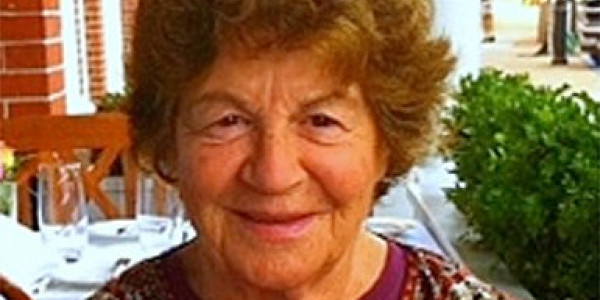
Source: ICCJ Board
The ICCJ mourns the recent death of Judith Hershcopf Banki, an internationally renowned writer, lecturer and pioneer in interreligious affairs.
Judith Hershcopf Banki was an internationally renowned writer, lecturer and expert in interreligious affairs. Her writings and research reports largely focused on the image of the “other” in religious education and the sources of prejudice in various teaching and preaching traditions. She has served as the Associate National Director of Interreligious Affairs for The American Jewish Committee and as editor of the Interreligious Newsletter. In 2001, she received an honorary doctorate from Seton Hall University in recognition of her pioneering work in the area of Jewish-Christian Relations. Ms. Banki authored The Image of the Jews in Catholic Teaching, a memorandum which helped pave the way for the historic declaration, Nostra Aetate, adopted at the Second Vatican Council. She condensed and interpreted major religious textbook self-studies carried out at Yale Divinity School, St. Louis University and Dropsie College in the United States, and in Europe at the Pro Deo University in Rome, Louvain University in Belgium and the universities of Duisberg and Freiburg in Germany. An early proponent of women’s interreligious dialogue, she was a founding member of the Women of Faith Task Force, a dialogue involving Jewish, Christian and Muslim women. She was the only woman to give a paper at the Vatican-Jewish conference in Baltimore, 1993.
Her writings have appeared in a variety of publications, including Commonweal, Religious Education, the National Catholic Register, and the Journal of Ecumenical Studies. For two consecutive years, her coverage of the Second Vatican Council was featured as “The Year in Religion” articles of the American Jewish Year Book (1965-66). Her article “Baltimore and Eisenach: Reflections on Two Dialogues” was awarded The Graymoor Ecumenical Prize for 1993.
Judith Banki has been repeatedly honoured for her longstanding commitment to interfaith dialogue, including an honorary doctorate from Seton Hall University in 2001, the Interfaith Gold Medallion from the International Council of Christians and Jews [ICCJ], the Nostra Aetate Award from the National Catholic Center on Holocaust Education at Seton Hill University, and the 2009 Shevet Achim Award from the Council of Centers on Jewish-Christian Relations [CCJR]. In 1992, the National Workshop of Christian-Jewish Relations, in recognizing her contributions, said: “No one has done more to shape the nature and meaning of interreligious relations as we have developed them, perhaps uniquely, in this country than Judith Banki." One of the pioneers of organized interreligious dialogue, she was honored by the National Workshop on Christian-Jewish Relations in 1992.
[ courtesy of the Council of Centers on Jewish-Christian Relations (https://www.ccjr.us/news/newsflash/in-memory-of-judith-hershkcopf-banki) ]
Banki was a regular speaker and participant in ICCJ conferences. Some of her exceptional work can be found below:
- Nostra Aetate: Reflections from an Eyewitness (Rome, 2015)
- “Shalom aleichem! Pax nobi! As-salamu alaykum! Béke legyem veled! Peace be with you!” (Budapest, 2018)
- 75 Years After Seelisberg - Reflection
- Judith Banki on her Historic Role in Nostra Aetate and Pioneering Work in Interreligious Engagement
(A report by Peter Admirand, Christian Co-Chair of the Irish Council of Christians and Jews)
More:
Co-sponsored by ICCJ's member organization, the Irish Council of Christians and Jews, the well-known and highly esteemed Dr Judith Banki offered an eyewitness' and insider's report on more than 50 years of Jewish-Christian dialogue.
ANETTE ADELMANNICCJ General Secretary
Judith Banki on her Historic Role in Nostra Aetate and Pioneering Work in Interreligious Engagement
(A report by Peter Admirand, Christian Co-Chair of the Irish Council of Christians and Jews)
Judith BankiOn February 25th, 2021, interfaith pioneer Dr Judith Banki led over 110 students, academics, and colleagues across Europe and America on her key role in what became the Vatican II document, Nostra Aetate in 1965. The talk was supported by the Irish Council of Christians and Jews in partnership with Dublin City University’s Centre for Interreligious Dialogue and part of the school of Theology, Philosophy and Music’s Theology, Religious Studies, and Philosophy Research Seminars. Dr Peter Admirand, the Christian Co-Chair of the Irish Council of Christians and Jews and the Director of DCU’s Centre for Interreligious Dialogue, organized and hosted the ZOOM talk.
In the Q & A that followed Dr Banki’s main talk, she also touched upon her ongoing engagement in interfaith dialogue and encounters, showing an envious amount of memory-recall and knowledge of the leading figures in the field both before Nostra Aetate and the subsequent 60 years since. Not surprisingly, comments from students, the academic community, and members of the International Council of Christians and Jews stressed how much of an honor and privilege it was to hear her. Ray, a 3rd year student studying to be a post-primary teacher wrote: “The lecture was fascinating, especially when you think that she was a top table player through such a historical event. Her humility and willingness for progress stood out to me - this is an innate trait that one cannot be taught but is something everybody worldwide could work on.”
Likewise, Kaz, an Erasmus Student from Lithuania studying this term in Ireland, remarked: “Judith not only worked towards building a bridge which would allow for a conversation between groups of different religious backgrounds…but also broke the mold, which was incredibly brave of her. Judith put herself in a situation where she was making a change…As Judith said, she was told ‘A woman can’t do this job’, but she came out as a very strong woman who is to this day passing on her stories which help us all be more tolerant and open minded today.”
Numerous comments in the ZOOM chat also praised her for giving an “inspiring” lecture, many from those who are also pioneers and leaders in the field. Dermot Lane commented: “A wonderful lecture. The enduring power of a faithful witness. Thank you,” while Sister Celia Deutsch wrote: “Thanks so very much, Judy. You are an inspiration to so many of us!”
Please note:
The views, opinions, and conclusions expressed by the author(s) of this article do not necessarily represent the views of the ICCJ, its Executive Board, or its national member organizations.