Whose Jesus? Jewish Perspectives on Jesus of Nazareth. Walter Homolka
Doświadczenia i perspektywy w dialogu żydowsko-chrześcijańskim
07/08/2026 | Na stronie od 07/08/2026
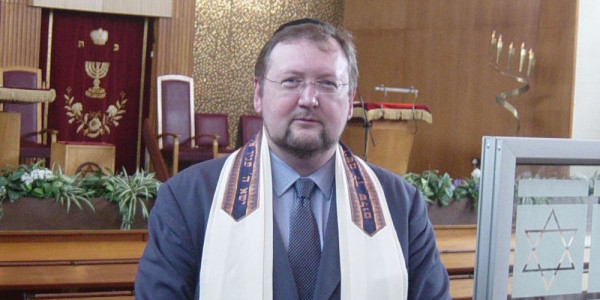
Walter Homolka University of Potsdam School of Jewish Theology,
Źródło: „Teologia i Moralność”, Volumen 21 (2026), numer 1 (41), s. 9–14ISSN 1898-2964 eISSN 2450-4602
Abstrakt: Artykuł analizuje rozwój żydowskich interpretacji Jezusa z Nazaretu w kontek-ście dialogu żydowsko-chrześcijańskiego. Autor stosuje metodę historyczno-krytyczną oraz analizę historii idei, aby prześledzić powstanie żydowskich badań nad Jezusem od XVIII wieku do współczesności. Badanie pokazuje, że zainteresowanie Jezusem w myśli żydowskiej było w dużej mierze związane z próbą określenia tożsamości judaizmu w społeczeństwach zdominowanych przez chrześcijaństwo. Artykuł dowodzi, że żydowskie badania nad historycznym Jezusem stanowią ważny impuls dla współczesnej refleksji chrystologicznej oraz dla pogłębienia dialogu międzyreligijnego.
Whose Jesus? Jewish Perspectives on Jesus of Nazareth – Experiences and Perspectives in Jewish-Christian Dialogue
Walter Homolka
University of Potsdam School of Jewish Theology, Germanywalter.homolka@uni-potsdam.de
https://orcid.org/0000-0003-1021-2341
Abstract: This article examines the development of Jewish interpretations of Jesus of Nazareth within the broader framework of Jewish-Christian dialogue. Employing histori-cal-critical and intellectual-historical methods, the study traces the emergence of Jewish scholarship on Jesus from the eighteenth century to the present. It argues that Jewish engagement with Jesus was closely connected with efforts by Jewish thinkers to redefine Jewish identity within societies shaped by Christian dominance. The article concludes that the Jewish quest for the historical Jesus has become an important stimulus for contempo-rary Christology and for the deepening of interreligious dialogue.
Open Access article, distributed under the terms of the CC licence (CC-BY, https://creativecommons.org/licenses/by/4.0/)
Introduction
At first glance, Jews and Christians today appear to enjoy a closer relationship than ever before. The horrors of the Shoah accelerated interreligious and inter-cultural dialogue between the two traditions. The Holocaust profoundly affected mainstream Christian churches and contributed to a reassessment of Christian theological attitudes toward Judaism. In many Western contexts, Judaism came to be recognised as a religious tradition possessing its own theological integrity. Catholic initiatives against antisemitism and the beginnings of the Christian--Jewish dialogue in Germany, for example, illustrate how theological reflection after the Second World War helped reshape relations between the two commu-nities (Füllenbach 2015).
Within this renewed framework of dialogue, one striking development has been the emergence of a Jewish engagement with the figure of Jesus. This phenomenon, often described as a “Jewish quest for the historical Jesus,” has become a remarkable example of theological exchange between Judaism and Christianity.
1. Early Roots of the Jewish Engagement with Jesus
The origins of Jewish scholarly engagement with Jesus reach back at least to the eighteenth century. In 1751, Rabbi Jacob Emden emphasised Jesus’s Jewish identity and acknowledged the historical connection between Christianity and Judaism. Commenting on Avot 4:11 in his work Ez Awot, Emden wrote that Christians and Muslims belong to a community that ultimately serves the di-vine purpose and that both traditions emerged historically from Judaism while spreading knowledge of the God of Israel among the nations (Emden 1751). Emden’s reflections were closely related to contemporary Jewish concerns about messianic movements and the relationship between Judaism and Christianity in the eighteenth century (Schacter 2012).
From the nineteenth century onward, Jewish thinkers increasingly stu-died Jesus within the context of Jewish history. This development paralleled Christian scholarly quests for the historical Jesus and reflected the intellectual environment created by the Enlightenment and Jewish emancipation. A wide range of Jewish thinkers contributed to this development, including Abraham Geiger, Joseph klausner, leo Baeck, Claude G. Montefiore, Robert Eisler, Joel Carmichael, Martin Buber, Schalom Ben-Chorin, David Flusser, Hyam Macco-by, Jacob Neusner, Amy-Jill levine and others.
A more detailed account of the development of Jewish Jesus research has been presented in my study Jesus Reclaimed: Jewish Perspectives on the Nazarene(Homolka 2015), later complemented by the volume Jewish Jesus Research and Its Challenge to Christology Today (Homolka 2016).he academic world.
1.1. Wissenschaft des Judentums and the Reclaiming of Jesus
The Jewish study of Jesus was closely connected with the intellectual move-ment known as Wissenschaft des Judentums. This scholarly enterprise aimed to demonstrate the cultural and intellectual value of Jewish civilisation within modern European society and to secure recognition for Jewish scholarship wi-thin the academic world.
Jewish scholars investigating the historical Jesus were therefore often moti-vated less by theological curiosity than by a desire to reposition Judaism within a predominantly Christian cultural environment. Their work formed part of a broader effort to safeguard the enduring value of Jewish civilisation while seeking an acceptable place for Jewish life within societies historically shaped by Christianity (Homolka 2015; Homolka 2016).
In this sense, postcolonial theory offers useful analytical tools for under-standing the conflicts that arose from Christian claims to cultural and theolo-gical supremacy (Castro Varela and Dhawan 2020). The Jewish quest for the historical Jesus, therefore, cannot be understood solely as a theological debate. Rather, it also functioned as a sociopolitical strategy designed to challenge Chri-stian hegemonic narratives and to assert the legitimacy of Jewish intellectual traditions.
Christian theologians themselves have increasingly recognised the impor-tance of confronting the historical entanglement between Christian theology and the scholarly study of Judaism. As Christian Wiese has shown in his study of Protestant academic culture in Wilhelmine Germany, a self-critical reassess-ment of Christian theological discourse is necessary to move beyond earlier limitations and enable productive interdisciplinary cooperation between Jewish studies and Christian theology (Wiese 2004, 444).
2. Debates in Modern Theology
The interaction between Jewish scholarship and Christian theology often pro-duced intellectual conflicts. One prominent example is the debate between Leo Baeck and the Protestant theologian Adolf von Harnack at the beginning of the twentieth century.
Harnack argued that Christianity represented a spiritual breakthrough bey-ond what he perceived as the legalistic framework of ancient Judaism. In his influential History of Dogma, he interpreted Christian doctrine as the product of the historical development of the gospel within the cultural environment of the Greco-Roman world (Harnack 1901, 1:22). In his lectures later published as What Is Christianity?, Harnack emphasised the decisive role of great historical personalities whose influence transcended the limitations of their historical context (Harnack 1901, 53).
In this perspective, Jesus appeared as an epoch-making personality whose message supposedly transcended the religious framework of Judaism. Although Harnack acknowledged that many elements of Jesus’ teaching were already pre-sent in Jewish tradition, he argued that they had lost their vitality within rab-binic teaching. The Pharisees, he suggested, had reduced religious teaching to a dead level in which the living spring of holiness had become polluted (Harnack 1901, 47– 48).
Jewish scholars strongly rejected such interpretations. They regarded them as examples of a theological narrative that devalued Judaism in order to elevate Christianity.
2.1. Jewish Responses and the Reinterpretation of Jesus
Rabbi leo Baeck was among the Jewish thinkers who sought to challenge these interpretations. In his work The Gospel as a Document of the History of the Jewish Faith, published in 1938, Baeck presented Jesus as a deeply Jewish figure whose teachings were firmly rooted in the religious traditions of Israel.
For Baeck, Jesus was a pious Jew who lived entirely within the spiritual world of Judaism. He neither intended to found a new religion nor could he have imagined becoming the object of divine worship. By reclaiming Jesus as a Jewish teacher, Baeck aimed to restore the historical context of the gospel tra-dition and to challenge Christian theological narratives that portrayed Judaism as spiritually obsolete.
These debates proved highly significant for the development of Jewish-Chri-stian dialogue. They enabled Judaism to be heard as an independent intellectual voice and gradually transformed the relationship between Jewish and Christian scholars from subordination to a dialogue between partners.
3. Contemporary Developments and Christological Questions
In recent decades, Christian theologians have increasingly reconsidered the theological implications of Jesus’ Jewish identity. Jan-Heiner Tück, for example, emphasises that the biblical description of Israel as “the apple of God’s eye” (Zech 2:12) leaves no room for supersessionist interpretations that would repla-ce Israel with the Church (Tück 2016, 17). According to Tück, whoever attacks Israel ultimately calls God himself into question.
These developments reflect a broader effort within Christian theology to find a position between different models of understanding the relationship betwe-en Christianity and Judaism. Among the models discussed are the traditional substitution model, the participation model in which Christians share in Israel’s covenant through Jesus, and the so-called two-covenant model, which recogni-ses the continuing validity of God’s covenant with the Jewish people.
The rediscovery of Jesus as a Jew has therefore had profound consequences for Christian theology. The distinction between the historical Jesus and the Christ of faith has produced a variety of interpretations that challenge traditio-nal Christological doctrines.
Conclusion
The Jewish engagement with Jesus represents far more than a scholarly curio-sity. It reflects a broader historical process in which Jewish thinkers sought to assert their intellectual and religious autonomy within a Christian-dominated cultural environment.
At the same time, the Jewish quest for the historical Jesus has stimulated important developments within Christian theology. By emphasising the Jewish identity of Jesus, Jewish scholarship challenges Christian theologians to recon-sider inherited assumptions and to articulate a Christology compatible with contemporary Jewish-Christian relations.
As Christoph Schwöbel has emphasised, the basic condition for genuine dialogue is the recognition of each partner’s autonomy. Dialogue requires that both sides define their own positions independently while acknowledging each other as equal partners in the conversation (Schwöbel 1997).
The historical figure of Jesus thus continues to function both as a point of tension and as a bridge between Judaism and Christianity. The many images of Jesus—Jesus of Nazareth, Jesus the Jew, Yeshua ben Josef, and the Christ proclaimed by Christian faith—bear the marks of centuries of conflict but also contain the potential for a new beginning in Jewish-Christian relations.
This lecture is dedicated to my teacher Christoph Schwöbel (1955–2021), honouring his seventieth birthday and the fifth anniversary of his passing.
Bibliography
- Castro Varela, Maria do Mar and Nikita Dhawan. 2020. Postkoloniale Theorie – Eine kritische Ein-führung. Bielefeld: transcript.
- Emden, Jacob. 1751. Ez Awot. Amsterdam.
- Füllenbach, Elias H. 2015. “katholische Initiativen gegen den Antisemitismus und die Anfänge des christlich-jüdischen Dialogs in Deutschland.” Freiburger Rundbrief, 22(1): 2–19.
- Harnack, Adolf von. 1901. History of Dogma. Boston: little, Brown.
- Homolka, Walter. 2010. “Back to the Ice Age? The Roman Catholic Church and Judaism.” Israel Affairs, 16(4): 496–509.
- Homolka, Walter. 2013. “Gemischte Bilanz. Benedikt XVI. aus jüdischer Perspektive.” In: Der The-ologenpapst: Eine kritische Würdigung Benedikts XVI., edited by Jan-Heiner Tück, 356–359. Freiburg: Herder.
- Homolka, Walter. 2015. Jesus Reclaimed: Jewish Perspectives on the Nazarene. New York: Berghahn.
- Homolka, Walter. 2016. Jewish Jesus Research and Its Challenge to Christology Today. leiden: Brill.
- Schacter, Jacob J. 2012. “Rabbi Jacob Emden, Sabbatianism, and Frankism.” In: New Perspectives on Jewish-Christian Relations, edited by Elisheva Carlebach and Jacob J. Schacter. leiden: Brill.
- Schwöbel, Christoph. 1997. “Gemeinsamkeiten entdecken – Spannungen aushalten.” Kirche und Israel, 12(2): 174–187.
- Schwöbel, Christoph. 2011. Gott im Gespräch: Studien zur theologischen Gegenwartsdeutung. Tübin-gen: Mohr Siebeck.
- Tück, Jan-Heiner. 2016. Gottes Augapfel: Bruchstücke zu einer Theologie nach Auschwitz. Freiburg: Herder.
- Wiese, Christian. 2004. Challenging Colonial Discourse: Jewish Studies and Protestant Theology in Wilhelmine Germany. leiden: Brill.
.Walter Homolka – Rabbi, Professor of Contemporary Jewish Philosophy of Re-ligion at the School of Jewish Theology of the University of Potsdam. His research focuses on Jewish theology, Jewish and comparative religious law, Jewish-Chri-stian relations, and modern Jewish thought, with particular attention to Jewish interpretations of Jesus and the theological implications of interreligious dialogue.
Pobierz załączniki
Hose Jesus? Jewish Perspectives on Jesus of Nazareth – Experiences and Perspectives in Jewish-Christian Dialogue PDF