Choosing Between October 6 and October 8
05/11/2025 | Na stronie od 17/03/2026
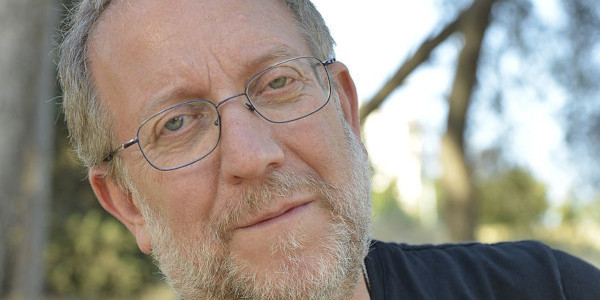
Source: Hadassah Magazine
Yossi Klein Halevi, senior fellow at the Shalom Hartman Institute in Jerusalem and author of several books, including Letters to My Palestinian Neighbor, a New York Times best seller. He is currently working on a book about the meaning of Jewish survival, more.
To be a post-October 7 Jew is to accept the responsibility of living at a pivotal moment in Jewish history. It is to know that our generation’s turn has come to confront Jewish vulnerability and reaffirm Jewish purpose. It is to find the courage and fortitude of our ancestors within ourselves. It is to understand, as well, that power presents moral dilemmas our ancestors in exile couldn’t imagine. It is to be multidimensional Jews, embracing complexity and contradictions.
To be a post-October 7 Jew is to share in the resilience of a people capable of overcoming the most formidable threats. On the day of the Hamas massacre on October 7, 2023, Israel seemed to be unraveling. Its military deterrence—essential for its long-term survival—had been shattered. Israel’s weakest enemy had delivered the most devastating blow in our history. We experienced the destruction of Israel in microcosm: our border overrun, our army and government in disarray, citizens left to fend for themselves against an enemy with no moral restraint. Helpless, as though there were no Jewish state.
Who could have imagined on that horrific day that the Israel Defense Forces would recover its elan and so decisively restore its credibility? That the terrorist siege around our borders would be broken? That we would literally disable Hezbollah by wounding thousands of its fighters in one of the most brilliant operations in the history of warfare? That we would dominate the skies of Iran for 12 days, without losing a single plane, and entice America to join the effort, not to save us but to share in our victory?
And yet to be a post-October 7 Jew is to know the maddening elusiveness of a knockout blow. This is not the 1967 Six-Day War. The “12-Day War,” as President Trump called the Israeli and American attack on Iran’s nuclear facilities, is hardly over. Iran is still working toward a nuclear bomb, Hezbollah hasn’t yielded its weapons and Hamas has not surrendered. Perhaps our greatest victory has been to restore faith in ourselves. But a wounded, grieving and still-anxious Israel is not celebrating.
To be a post-October 7 Jew is to know the reach and the limits of our power. We can fly more than 1,200 miles and neutralize Iran’s air defenses, but we cannot rescue hostages within arm’s length of the IDF.
Over the last several decades, the Zionist promise of safe refuge for the Jewish people seemed to have finally been realized. The trajectory of Israel’s wars revealed a gradual diminishment of threat. In the 1948 War of Independence, the new state faced seven Arab armies; in 1967, three armies; in the 1973 Yom Kippur War, two. Since the 1982 Lebanon War, Israel fought its battles on a single front.
Until October 7. Now we have come full circle, back to a seven-front war. We veer from Gaza to Lebanon to Iran to Yemen to Syria to Iraq while combatting terrorism in the West Bank. Even as the fighting on one front eases, another erupts. Israel is stronger than ever, yet we have not been freed from regional conflict and existential threat.
On October 7, we came face to face with the consequences of wishful thinking. We imagined we could live normal lives while surrounded by Iranian proxies, bribing Hamas with Qatari dollars and deterring Hezbollah with a balance of fear. A post-October 7 Jew knows: If a regime constantly affirms its intention to destroy you, you will awaken one day to terrorists in your living room.
Now we live in a state of permanent alertness. We crave the return to routine that helps us cope with endless threat, yet fear the return of complacency. Now, when Israelis pledge “never again,” we mean the illusions that led to October 7.
To be a post-October 7 Jew is to perceive reality differently than most of the world. It is to live in an alternative Jewish universe, where what to us is urgent and self-evident is widely dismissed as irrelevant or outright lies. It is being forced to prove that Hamas’s atrocities really happened, that mass rape was integral to its war strategy, that not Israel but its enemies are genocidal, that Jews around the world are facing a wave of hatred and physical threat not seen since the 1940s, that Jews don’t cause antisemitism, that Israel has the right to defend itself, that a Jewish state has the right to exist. It is to experience so much rage so much of the time that you feel you are about to explode.
Astonishingly, the disconnect began on the day of the massacre, with Israel’s critics describing it as a self-inflicted wound, an uprising of an oppressed people against occupation. But Israelis, including almost all on the left, perceived the massacre very differently, as part of the radical Islamist war against a Jewish state within any borders. For that reason, a united Israel went to battle, even though Israelis understood that this would be the most brutal of all our wars.
For the Iranian axis, there is no difference between a West Bank settlement and Tel Aviv. Even if a West Bank Palestinian state existed, an October 7 would still have been possible. That, after all, is the meaning of the slogan, “From the river to the sea.”
Hadassah Magazine Presents: Two Years On With Yossi Klein Halevi and Lee Yaron
Join us on Wednesday, October 29 at 12:30 PM ET when Hadassah Magazine Executive Editor Lisa Hostein hosts renowned Israeli writers Yossi Klein Halevi and Lee Yaron for a discussion about what it means to be a Jew today, in a post-October 7 world; how Israeli survivors are coping; and what almost two years of war and rising global antisemitism mean for the future of the Jewish people.
Astonishingly, that slogan went mainstream on the day its genocidal intent became clear. The goal was never a benign democratic binational state in which Jews and Palestinians lived happily together. On October 7, anti-Zionists revealed their hand: Their goal is the eradication “by any means necessary,” as the popular slogan puts it, of the so-called white colonial settler state of the Jews, who have no place in the land they stole.
For much of the world, Israel and the IDF’s response to the massacre was about revenge. However unconsciously, this accusation drew on the old Christian contempt for Judaism as a religion of vengeance, while theirs was the religion of love.
For Israelis, though, the war from the outset had strategic goals: re-establish deterrence and break the siege on our borders. More deeply, the goal was to deny terrorism immunity. Hamas’s strategy was brilliant in its simplicity: massacre Israeli civilians, then create the conditions that result in large numbers of Palestinian civilian casualties, triggering world revulsion against Israel. The perfect strategy for the age of social media: mobilize the journalists and the human rights activists, the conscience of humanity, to strengthen the terrorists.
Our friends around the world—and we are not friendless, even if it often feels that way—understood that a victorious Hamas would empower global terrorism. They understood that this was not only Israel’s but the West’s war, too. That Israel was “doing our dirty work,” as German Chancellor Friedrich Merz put it when Israel bombed Iran’s nuclear infrastructure in June. Those voices of sanity have been precious precisely because they have been rare.
The disconnect between Israelis and much of the world has continued through the war. Even as criticism over the war has grown among Israelis, its basic justness hasn’t been questioned. And no, however horrific, this is not genocide. The casualty proportion of civilians to combatants has been well within the norm of asymmetrical warfare fought in dense urban conditions, against an enemy operating from hospitals and refugee centers.
Still, we ask ourselves agonizing questions about Israel’s conduct. Why have so many Palestinian civilians been killed by IDF fire at food distribution points? Why didn’t the army better prepare its soldiers for such a complicated mission? Yes, the United Nations covers for Hamas, which strengthens its hold on power with stolen aid. But at what point do we concede that our alternative system isn’t working?
And most urgently: How did we get to the point where we allowed Gaza to veer to the edge of starvation? Yes, the United Nations falsely and repeatedly warned, from the very beginning of the war, that starvation was imminent; but eventually the wolf appeared at our door. It was not a deliberate policy to starve Gaza, but a combination of incompetence, neglect and Israeli government apathy has severely undermined the moral credibility of the Jewish people and left the Jewish state more isolated than at any time in its history.
To be a post-October 7 Jew, then, is to move between certainty and ambivalence, indignation and self-doubt, sometimes over the same dilemma. It is to resist those who seek to turn the epic story of the Jewish people’s return home into a monstrous crime, even while quietly fearing that the decades of relentless assaults have eroded our moral sensitivity. And it is to vehemently oppose the Holocaust inversion that portrays the Jewish state as genocidal for resisting a genocidal enemy, even as we anguish over the devastation we have caused.
To be a post-October 7 Jew is to have known, however fleetingly, a level of unity and shared purpose rare in Jewish history. On October 8, Israeli society instantly pivoted from its deepest-ever schism—over the ruling coalition’s assault on an independent judiciary—to the peak of national solidarity. Confronted with a revelation of pure evil, we responded with the instincts of peoplehood.
Perhaps inevitably, our divisions have re-emerged—over the mass military exemption of the ultra-Orthodox, over the government’s renewed attempts to weaken the judiciary, over the wisdom of continuing the war and even over the fate of the hostages.
Competing posters on Israel’s streets tell the story of how the hostage tragedy has failed to unite us. There are the faces of hostages with the words, “Don’t leave me behind.” The message being that saving them is more important than defeating Hamas. And there are the faces of fallen soldiers, demanding the IDF continue fighting “until victory.” That message is: Defeating Hamas is the greater priority.
To be a post-October 7 Jew is to struggle for a new vision for Israel. How can we manage our disagreements in a way that doesn’t risk the cohesiveness of Israeli society? How do we ensure that we remain true to our values, even under overwhelming threat? What does it mean to be a Jewish and a democratic state? What is the place of Arab citizens in Israeli identity? How should Israeli policymakers consider the needs and concerns of Diaspora Jews, whose lives are affected by our decisions?
Our choice is between October 6 and October 8—that is, between dissipation and convergence. Will our mutual antipathies define us, or will we commit to national healing?
To be a post-October 7 Jew is to know the strangeness of Jewish fate and ponder the meaning of the Jewish story. Zionism set out to end the anomaly of Jewish otherness and return us to the community of nations. How is it possible that, in a world replete with mass murder and state repression, we are once again the symbol of evil?
And most of all: Why is it always about the Jews? This is not only a political question about the persistence of an ancient hatred but a theological one. For me, as a Jew of faith, this time only strengthens the credibility of the story we have told ourselves from our earliest origins: That we are a people consecrated to a Divine purpose, and otherness comes with a price. That no matter how hard we try to “normalize” Jewish fate, Jewish destiny intrudes. And the price, it seems, is periodic ostracism.
But whatever one believes about the meaning of our story, Jews share a belief in its goodness. “This story will have a good ending,” read one Israeli bumper sticker shortly after the massacre. To be a post-October 7 Jew is to know that a time will come when our reality will not be defined by October 7.
Yossi Klein Halevi is a senior fellow at the Shalom Hartman Institute in Jerusalem and author of several books, including Letters to My Palestinian Neighbor, a New York Times best seller. He is currently working on a book about the meaning of Jewish survival.
Two Years On with Yossi Klein Halevi and Lee Yaron
In conversation with Hadassah Magazine Executive Editor Lisa Hostein, renowned Israeli writers Yossi Klein Halevi (Letters to My Palestinian Neighbor) and Lee Yaron (10/7: 100 Human Stories) join Hadassah Magazine Presents to discuss what it means to be a Jew today, in a post October-7 world as well as what two years of war and rising global antisemitism mean for the future of the Jewish people.
Further Resources
- Yossi Klein Halevi’s “Choosing Between October 6 and October 8” in Hadassah Magazine
- Lee Yaron’s “October 7 Survivors, Then and Now” in Hadassah Magazine
- Review of Yaron’s 10/7: 100 Human Stories in Hadassah Magazine. Purchase a copy of the book here
- Review of Halevi’s Letters to My Palestinian Neighbor in Hadassah Magazine. Purchase a copy of the book here
The Post-October 7 Jewish Reality with Yossi Klein Halevi and Lee Yaron
What does the presumed end of the war in Gaza mean for Israel and the Jewish people?
About this episode In conversation with Hadassah Magazine Executive Editor Lisa Hostein, renowned Israeli writers Yossi Klein Halevi (Letters to My Palestinian Neighbor) and Lee Yaron (10/7: 100 Human Stories) join Hadassah Magazine Presents to discuss what it means to be a Jew today, in a post October-7 world as well as what two years of war and rising global antisemitism mean for the future of the Jewish people.
Comments
Harry Rhodes says
September 2025 at 9:10 pm
Yossi, I’ve followed your work for many years, especially when I lived in Israel from 1985-2001. I always appreciate your insights, even though I might not agree with them.
Without going into the details of your article I do have one request. Please refer to post-October 7 Israelis rather than post-October 7 Jews. There are many American Jews, and I’m sure European Jews, who feel that Israel has gone astray, and that it’s massive destruction of Gaza is not justified.
I could go on, but my main point is that Israel today cannot claim to speak for Jews everywhere.
Shannah Tovah.
More:
Yossi Klein Halevi
- Two Years On: A Conversation With Yossi Klein Halevi and Lee Yaron
- The Post-October 7 Jewish Reality with Yossi Klein Halevi and Lee Yaron What does the presumed end of the war in Gaza mean for Israel and the Jewish people?
- The Vilification of World Jewry - with Yossi Klein Halevi & Donniel Hartman. Reflection on the uncertain future of Diaspora Jewry at this moment. 18/12/2025
- Yossi Klein Halevi: Trudność w nadaniu moralnego sensu wojnie w Strefie Gazy 22/09/2025
- Yossi Klein Halevi: Our season of reckoning: Israel’s moral crossroads in Gaza
Jews face some of the most complex dilemmas in our history and one-dimensional voices must not be allowed to determine the discourse 07/09/2025 - Yossi Klein Halevi on Israel, War, and Moral Complexity 13/05/2025
- Interview with Yossi Klein Halevi by Robert Silverman 25/10/2024, The Jerusalem Strategic Tribune Talks.
- Israelis’ joy seeing hostages freed is tempered by a deep bitterness — and rage, The Jewish News of Northern California By Yossi Klein Halevi | January 23, 2025
- Is anti-Zionism antisemitism? It doesn’t matter. It is time to shift gears and recognize that the delegitimization of Israel is the greatest threat facing the Jewish people today 24/12/2024
- The end of the post-Holocaust era 2024-10-07.
- Crush Hamas or free hostages? I choose the hostages
If they are abandoned, too many Israelis will believe they died for political reasons – with dire consequences for the country. 2024-09-05. - The war against the Jewish story The ease with which anti-Zionists have managed to portray the Jewish state as genocidal marks a historic failure of Holocaust education 05/05/2024
- Israel at War – There is No Justification. But…? Donniel Hartman and Yossi Klein Halevi discuss the nuances of context and justification, morality and war, and how language can engage or isolate allies. 26/10/2023
- Why is Israel being blamed for the Hamas massacre?
Erasing the legitimacy of the Israeli narrative fundamentally revives a pernicious antisemitic trope that Jews deserve their fate
25/10/2023.
Izraelski pisarz: Dlaczego Izrael jest obwiniany za atak Hamasu? (GOSC.pl) - A Traumatized but Reborn Israel Faces Terrifying Choices Yossi Klein Halevi: What happens on the battlefield in the coming weeks and perhaps months will help determine the next iteration of Israel. 18/10/2023
- Potrzebujemy terapii
JACEK DZIEDZINA: O przyczynach głębokiego niezrozumienia w relacjach pomiędzy Polakami i Żydami oraz szansach na jego przezwyciężenie mówi Yossi Klein Halevi, izraelski pisarz i dziennikarz. (gosc.pl) - How to halt the criminalization of Israel, Sun, May 23, 2021, Los Angeles Times
- Israel’s Real Existential Threat, The New York Times May 17, 2021
- Wypowiedź Yossiego Kleina Haleviego w trakcie spotkania Polskiej Rady Chrześcijan i Żydów 13. grudnia 2020, gdy został mu przyznany tytuł Człowieka Pojednania a ponadto zaprezentowane zostało polskie tłumaczenie jego książki „Listy do mojego palestyńskiego sąsiada”. (Tekst polski) - Otwarte spotkanie Polskiej Rady Chrześcijan i Żydów poświęcone wręczeniu tytułu Człowieka Pojednania Yossiemu Kleinowi Haleviemu z Jerozolimy - FB
- Izrael i COVID-19 – dzień po – wykład Yossiego Klein Halevy'ego (jęz. ang.). PROLOG 30. Festiwal Kultury Żydowskiej, 3 lipca 2020 16.00
- Żydowski pisarz Yossi Klein Halevi: Kocham Polskę (Więź, 5 III 2019)
- "Like Dreamers: The Story of the Israeli Paratroopers who Reunited Jerusalem and Divided a Nation".
Drogi życiowe kilku komandosów, którzy zdobyli Jerozolimę w 1967 r. Potem ich drogi się rozeszły, bo stali się oni aktywistami przeciwstawnych obozów politycznych. - I love Poland. /Times of Israel blog, Feb 20, 2019/ "A people deserves to be judged by its best, not its worst, and the best of the Poles are among the Jews' most trusted friends "
- Podcast: Yossi Klein Halevi on Moving In and Out of Extremism TIKVAH March 16, 2018.
“I know Jews who go to jail for blacks and Puerto Ricans and Chicanos and Pygmies. I know rabbis who went to Selma to get arrested. But I don’t know of a single rabbi who broke the law when the crematoria were being fed with twelve thousand Jews every day…Never again will Jews watch silently while other Jews die. Never again!” - Thus thundered Rabbi Meir Kahane before a crowd of thousands at a rally for Soviet Jews organized by his militant Jewish Defense League (JDL). In that crowd was a teenager from Borough Park who found himself drawn to the JDL’s embrace of Jewish power and contempt for the American Jewish establishment. That boy, Yossi Klein Halevi, would later move to Israel and become one of the most prominent authors and writers on the Jewish scene—but not before taking a winding journey into and out of the fringes of the Jewish Right. - Letters to My Palestinian Neighbor (June 28, 2018) "Letters to My Palestinian Neighbor is one Israeli’s powerful attempt to reach beyond the wall that separates Israelis and Palestinians and into the hearts of "the enemy." In a series of letters, Yossi Klein Halevi explains what motivated him to leave his native New York in his twenties and move to Israel to participate in the drama of the renewal of a Jewish homeland, which he is committed to see succeed as a morally responsible, democratic state in the Middle East."
- "Na progu ogrodu Eden. O pewnym Żydzie, który poszukiwał Boga w Ziemi Świętej wraz z chrześcijanami i muzułmanami" (2011)
- Wsłuchując się razem w szmer łagodnego powiewu, Teofil, 1( 29) 2011 (pismo studentów kolegium filozoficzno-teologicznego dominikanów)
- „U wejścia do ogrodu rajskiego”. "Jest to książka unikalnie piękna w wymiarze duchowym. Pisarka Cynthia Ozick mówi, że to „trwałe arcydzieło”. A były arcybiskup Canterbury Rowan Williams stwierdził, że to książka „pełna cudów, niezwykła i poruszająca”. Yossi opisuje w niej swe duchowe doświadczenia podczas, odbywanych w ciągu dwóch lat, podróży po świętych miejscach chrześcijan i muzułmanów w Ziemi Świętej. A jeździł tam jako wierzący Żyd. Książka pełna jest empatii, szacunku i miłości. Mój żydowski współprzewodniczący Polskiej Rady Chrześcijan i Żydów, prof. Stanisław Krajewski, uważa tę książkę za jeden z najgłębszych tekstów z zakresu dialogu międzyreligijnego, jakie kiedykolwiek napisano. Niestety, książka ta ukazała się w 2001 r., tuż przed zamachami na World Trade Center, przez co nie spotkała się z tak szerokim przyjęciem, na jakie zasługuje." - Zbigniew Nosowski, laudacjia z okazji wręczenia autorowi tytyłu Człowiek Pojednania, przyznawanego przez Polską Radę Chrześcijan i Żydów.
- Memoirs of a Jewish Extremist The Story of a Transformation, Publisher - Harper Perennial, Publication Year - 2014.
Now available in paperback for the first time, with a new introduction, the poignant and insightful memoir from Yossi Klein Halevi, the award-winning journalist and author of the acclaimed Like Dreamers—a coming-of-age story about a traumatic family history, radical politics, and spiritual transformation that speaks to a new generation struggling to understand what it means to be Jewish in America.
The child of a Holocaust survivor, Yossi Klein Halevi grew up in 1960s Brooklyn perceiving reality through the lens of his family’s brutal past. Increasingly identifying with their history of suffering, he regarded the non-Jewish world with fear and loathing. Determined to take action—and seek retribution—he became a disciple of the late rabbi Meir Kahane and a member of the radical fringe of the American Jewish community.
In this wry and moving account, Halevi explores the deep-rooted anger of his adolescence and early adulthood that fueled his increasingly aggressive activism. He reveals how he started to question his beliefs—and his self-inflicted suffering as a hostage of history—and see the world from his own clear perspective.
As a journalist and author, Halevi has dedicated himself to fostering interfaith reconciliation. Memoirs of a Jewish Extremist explains how such a transformation can happen—giving hope that peaceful coexistence between faiths is possible.